
Issue 04 · Keeping It · Magazines & Annuals
Why the Car Is Always on a Hill
Motoring photography settled on about five compositions by 1960 and has barely moved since. Each of them is solving a specific problem.
The three-quarter front
The default shot shows the car from roughly forty-five degrees off the nose, slightly below eye level. It is the default because it is the only single angle that shows length, width, the face and the shoulder line at once.
Below eye level matters more than the angle. A car photographed from standing height looks like a shape on a road; the same car from crouching height looks like an object with mass. Every manufacturer photographer has worked from a crouch for seventy years.
The hill, and what it hides
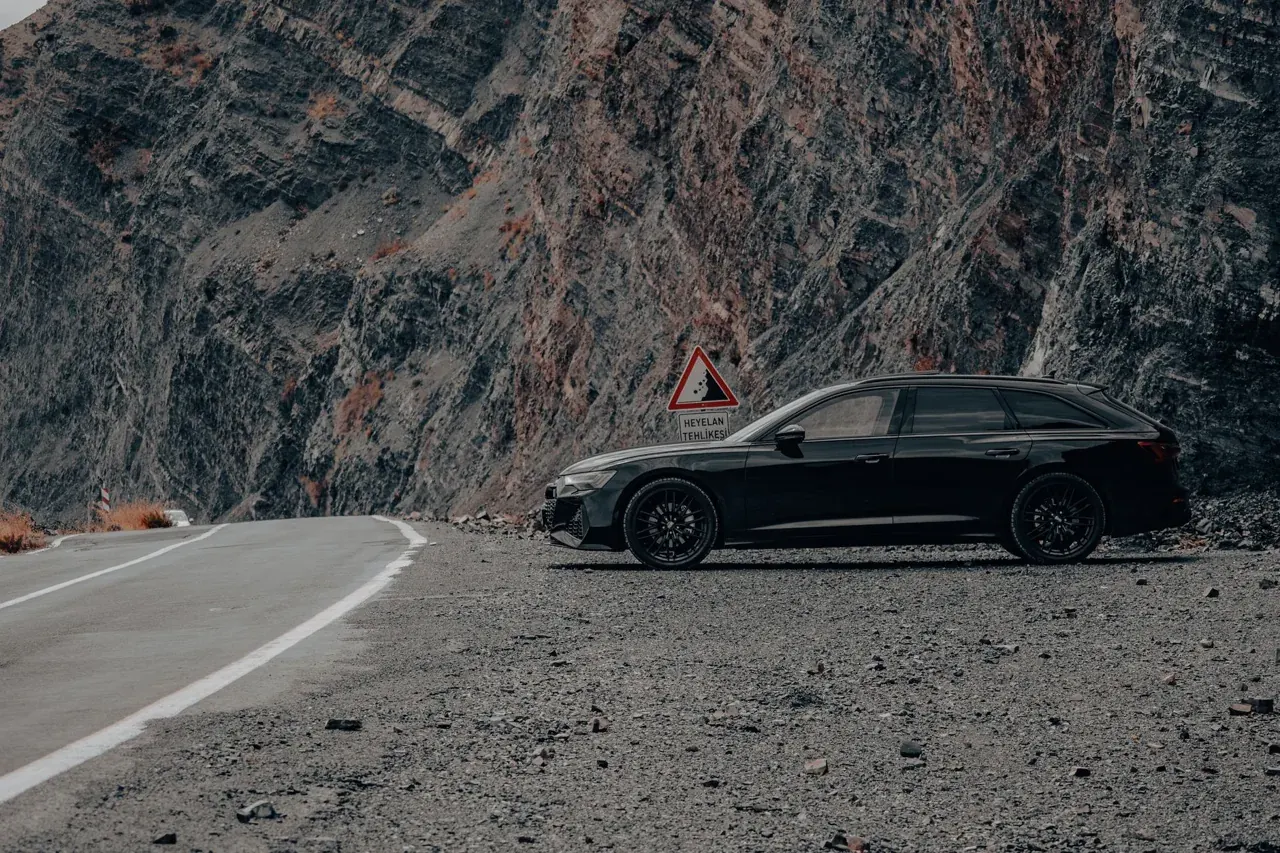
A car parked on a level surface sits with its wheels in shadow and its underside visible as a dark band. On a crest or a slope the ground falls away, the wheels sit against sky or distance, and the car appears to be lighter than it is.
A slight uphill also lifts the nose, which flatters almost every profile. And a curving hill road gives the composition a diagonal for free, which is the cheapest way to imply movement in a static frame.
It became a cliche because it works, and it survives into modern photography where the same job could be done in software.
Panning, and the first honest speed
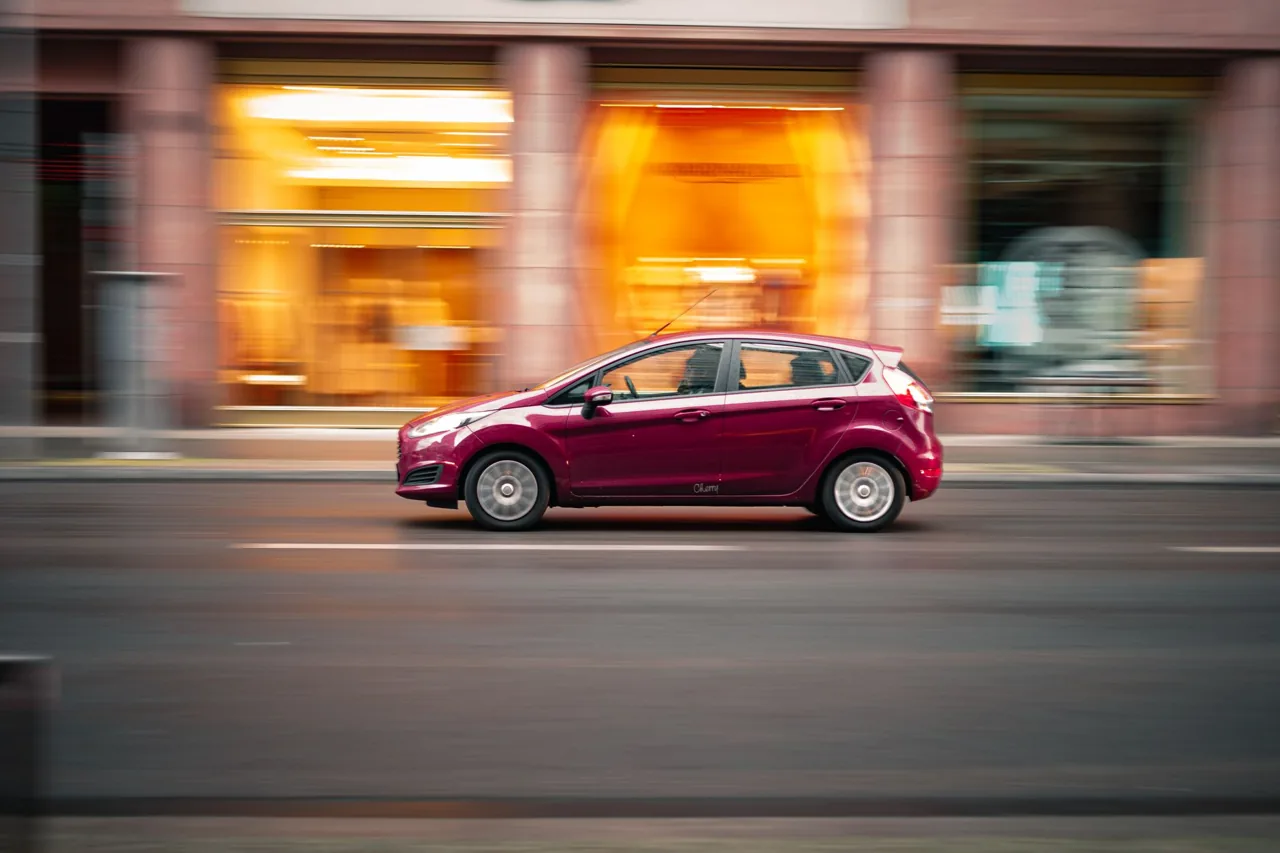
Motion blur from a panned shot was the first technique that showed speed rather than implying it. The camera follows the car, the background smears, the car stays sharp. It requires a fast enough lens, a steady enough pan and a great deal of wasted film.
Before panning, speed in motoring photography was conveyed by the illustrator, which is a large part of why illustration survived so long in this field after it had died elsewhere. Geo Ham could draw speed in 1935; no photographer could reliably shoot it until the 1950s.
The interior problem
Car interiors are the hardest thing in the discipline. The space is small, the contrast range between the windows and the footwell is enormous, and every surface reflects.
Period solutions were physical: remove a door, shoot through the gap, light the interior with flash balanced to the daylight outside. Modern solutions are computational and blend several exposures.
This is why old interior shots often look wrong in a way people cannot place. The dashboard is lit and the windows are blown to white, because that was the honest limit of a single sheet of film.
Duncan Ashby, May 2026
Next piece: Collecting Paper Without Buying Rubbish